
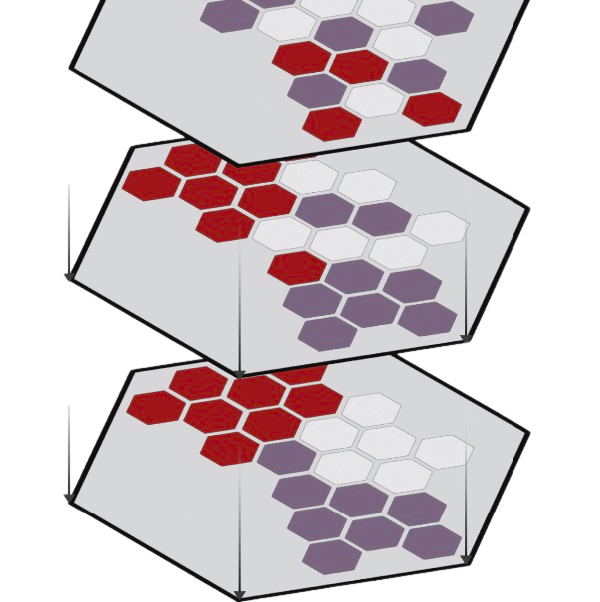
This foundational, technology agnostic workshop will focus on the design, execution, and downstream analysis of spatial transcriptomics experiments, with the goal of helping participants transform raw spatial datasets into biologically meaningful insights. The program is designed to provide a foundational understanding of both spot-based and single-molecule spatial transcriptomics technologies, while also equipping participants with practical guidance on experimental planning, tissue preparation, platform selection, and computational analysis.
This workshop will not be limited to a single technology or vendor. Instead, it will expose participants to the broader landscape of spatial transcriptomics methods by integrating concepts and datasets from both spot-based and single-molecule platforms. Example datasets and case studies may include technologies such as Visium HD, Slide-seq, Stereo-seq, Xenium, CosMx, and other emerging spatial platforms. In doing so, the workshop will help participants understand both the common analytical foundations across platforms and the important differences that affect experimental design, preprocessing, segmentation, integration, and interpretation.
The workshop will then guide participants through the fundamental computational steps required to process raw spatial datasets and conclude with analytical approaches for biological querying, interpretation, and hypothesis generation. The workshop will place particular emphasis on comparative understanding across technologies, including differences in spatial resolution, sensitivity, image dependence, cell segmentation requirements, and computational burden. This workshop will be offered in person and virtually. Virtual participants will be supported by dedicated virtual teaching assistants, although the learning experience may not fully replicate the benefits of in-person participation. Priority for in-person participants will be given to researchers located in Canada whose work aligns closely with the thematic and training goals of the program.
Participants will gain practical experience and skills to be able to:
- Appreciate the bench practices and workflow in preparation for optimum spatial transcriptomics experiments.
- Understand the guiding principles that influence panel design (in single molecule platforms) and will be able to design an optimum panel.
- Perform data clean-up and pre-processing (normalization, dimensional reduction) steps relevant and specific towards spatial transcriptomics platforms.
- Understand the different non-spatial and spatial methods of analysis and will be able to apply some of these methods during the workshop, including the fundamental application of geo-spatial statistical analysis.
- Understand the principles behind non-segmentation and segmentation analysis and apply a basic non-seg/segmentation method over their analysis.
- At the end of the course, the registrant will be able to plan spatial transcriptomics experiments and direct their experiment through analysis.
Graduates, postgraduates, and PIs working or about to embark on an analysis of spatial genomics data. Attendees may be familiar with some aspect of single cell RNA-seq analysis (e.g. gene expression analysis), single molecular spatial transcriptome and image analysis, or have no direct experience. This workshop is geared towards those who have both biological and bioinformatics interests.
Basic familiarity with Unix commands and the R/Python scripting language. This workshop requires participants to complete pre-workshop tasks and readings. You will also require your own laptop computer. Minimum requirements: 1024×768 screen resolution, 1.5GHz CPU, 8GB RAM, 10GB free disk space, recent versions of Windows, Mac OS X or Linux (Most computers purchased in the past 3-4 years likely meet these requirements).
Module 1: Garbage In, Garbage Out — Tissue Quality, Experimental Design, and Platform Awareness
Getting to Know Tissues
Tissue integrity, and therefore tissue preparation, is fundamental to generating high-quality data for downstream computational analysis and biological interpretation. In this lecture, participants will learn practical guidance from the lead instructor on why tissue processing matters, what factors affect tissue quality, and the critical steps to consider when planning experiments and preparing samples for spatial transcriptomics workflows.
Getting to Know the Technicalities of Spatial Transcriptomics Platforms
This lecture will introduce the major spatial transcriptomics platforms through the perspective of a core-facility expert, with a focus on those represented in this workshop. Participants will be guided through how the technologies work, including the distinction between spot-based and single-molecule/image-based approaches, as well as differences in spatial resolution, sample processing, sequencing workflows, image requirements, and final output structure.
Module 2: Computational Scaling Across Resolutions
This lecture will discuss how computational scaling affects biological interpretation in spatial transcriptomics. Participants will explore how different biological questions may require different spatial resolutions, and how approaches such as binning, spot resizing, smoothing, and cell-type propagation can be used to adapt analyses accordingly.
The lecture will also compare the applicability of these methods between spot-based and single-molecule platforms, emphasizing when increased granularity improves interpretation and when it may instead introduce noise or false certainty.
Participants will learn the following:
- visualize data at different spot sizes or bin widths
- compare the impact of resolution changes on biological interpretation
- apply smoothing or label-propagation approaches for cell-type annotation
- evaluate the clarity, limitations, and biological trade-offs of scaled representations across platform types
Module 3: Understanding your platform data outputs
This end of the day module will summarize day 1 lectures and practical and run through the data outputs files and formats and take the participants through understanding the information that they receive after a spatial run.
Lab Practical:
Participants will load and take a look inside each output and understand the informational content and their relationships to the rest of the modules.
The practical will also teach participants on how to manage their data outputs and perform appropriate checksums to manage file transfers and data integrity.
Module 4: Drawing Boundaries – The Segmentation Problem
Cell segmentation is a critical step in spatial transcriptomics analysis, but its role, necessity, and difficulty differ substantially between spot-based and single-molecule platforms. In this lecture, participants will be introduced to the segmentation problem as it relates to gene-expression detection strategy, image dependency, and spatial resolution.
The lecture will cover:
- why segmentation matters in single-molecule and image-based platforms
- when segmentation is optional, approximate, or avoided in spot-based platforms
- how detection resolution influences segmentation accuracy
- the challenges of assigning transcripts or signal to biologically meaningful cellular boundaries
- an overview of currently available segmentation and segmentation-free methods, including where and when they are most applicable
Lab Practical:
- The different segmentation methods available for spot-based and single-molecule spatial transcriptomics platforms.
- Students will run two segmentation scripts (one targeted against spot-based platforms and the second targeted against single-molecule platforms) over instructor-prepared datasets.
- overlay the script generated standard segmentation mask onto the spatial dataset
- compare the segmentation between methods and also between spot-based and single-molecular platforms.
- explore how segmentation assumptions, platform resolution affect downstream biological interpretation across different platform types
Module 5: Normalization and Transforming Your Data
In this lecture, participants will revisit the principles behind normalization and transformation, beginning with methods traditionally developed for single-cell transcriptomics and extending into their use in spatial data. The session will discuss how normalization strategies differ depending on whether data come from spot-based or single-molecule platforms, and how signal sparsity, transcript density, segmentation, and tissue architecture influence these choices.
Participants will also be introduced to emerging spatially aware normalization methods, with discussion of their current promise and limitations.
Lab Practical
Participants will work with prepared toy datasets representing both spot-based and single-molecule spatial transcriptomics outputs in order to:
- identify the key files required to begin analysis
- perform quality control
- Understand the differences in transcript counts and read depth between the platforms and how these impact assumptions and normalization methods.
- apply normalization strategies
- transform the data into formats suitable for downstream exploration and modeling
Module 6
In this lecture, participants will be introduced to both non-spatial and spatially aware analysis methods used in the interpretation of spatial transcriptomics datasets. The session will cover dimensionality reduction, clustering, spatially variable gene expression, and the importance of capturing biological structure beyond simple visualization.
Participants will also be introduced to different approaches for modeling the spatial network, and will develop a simple but intuitive understanding of the mathematical logic behind these methods.
Lab Practical:
- Participants will continue their analysis using the processed datasets from the previous module and will apply the following approaches:
- PCA and Leiden clustering using methods traditionally applied to single-cell datasets
- spatially aware embedding methods
- spatial clustering algorithms
- comparison of biological signal captured by non-spatial versus spatial approaches
Module 7: Putting on your thinking cap – critical evaluation of your analysis
Here we will pause the lectures and practicals and form teams. Each team has to review their analysis and the data output and answer a series of questions with TAs and instructors.
The purpose of this exercise is to
- train participants to build skills and intuition in how they will select and proceed in their technology selection and analysis methods.
- Disclose a new method or dataset and ‘challenge’ them to apply what they have learnt to analyze and answer a set of a questions as a team
Module 8 : Gene Enquiry and Visualization
Differential gene expression and gene enrichment analyses across different regions, domains, or cell populations remain central to biological discovery in spatial transcriptomics. In this lecture, participants will be introduced to the theoretical foundations of differential analysis in both aggregate and spatially defined tissue domains.
The session will also briefly introduce exploratory approaches to proximity-based cell–cell communication analysis, particularly in the context of tissue architecture and disease modeling.
Lab Practical:
- determine an appropriate statistical framework for differential gene expression analysis
- define biologically meaningful comparison groups in spatial data
- examine results through a biologically relevant lens
- compare cell-type-specific differential gene expression with exploratory cell–cell communication analyses
Module 9: Realizing the spatial potential in your datasets
Participants will learn the fundamentals of:
- Distance/Proximity analysis
- Introduction to spatial statistics
- Overview of different spatial metrics available spatial data analysis
- Overview of all current available spatial methods/packages available and the spatial metrics incorporated in these different methods
- Discuss which methods are applicable for which application
Lab Practical
- Apply selected statistical methods/package for full spatial analysis of toy dataset.
Duration: 3 days
Start: Sep 28, 2026
End: Sep 30, 2026
Status: Application Open
Apply
Canadian Bioinformatics Workshops promotes open access. Past workshop content is available under a Creative Commons License.





Posted on: