Recognizing Canadians for their achievements.
From research innovations to community impact, the Canadian Bioinformatics Hub recognizes and awards top talent and contributions.
Canadian Bioinformatics Hub Recognition Awards
The CBH Research and Innovation Award
The CBH Research and Innovation Award recognizes early and mid- career professionals in any sector who are shaping Canada’s bioinformatics, computational biology, and data science (BCBDS) ecosystem. This award highlights active innovations that are making a difference and show strong promise for future impact. It celebrates projects, products, or initiatives that value diverse perspectives and build unexpected connections to deliver transformative solutions.
The Francis Ouellette Community Award
The Francis Ouellette Community Award is established in recognition of Francis Ouellette, a major contributor to the development of the Canadian bioinformatics community for 25 years. The Francis Ouellette Community Award is given to an early and mid- career professional in any sector who is making outstanding contributions to building community among Canada’s bioinformatics, computational biology and data science (BCBDS) professionals, or is making outstanding community contributions, including creating or curating community resources (e.g. data, software tools, policies) that empower BCBDS research.
CBH Impact Trainee Award
The CBH Impact Trainee Award is given to a leading trainee in any sector who is making outstanding contributions in areas of The CBH Research and Innovation Award or The Francis Ouellette Community Award.
2026 CBH Recognition Awardees
Francis Ouellette Community Award
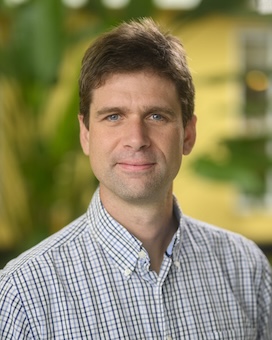
Benjamin Haibe-Kains
Senior Scientist, Princess Margaret Cancer Centre, University Health Network
Professor, Medical Biophysics, University of Toronto
A champion of open and FAIR (Findability, Accessibility, Interoperability, and Reusability) science, Dr. Haibe-Kains developed and maintains a suite of impactful open-source platforms, including the ORCESTRA, PharmacoDB, SYNERGxDB, AIRCHECK, ToxicoDB and the University of Toronto T-CAIREM Health Data Nexus, providing global access to analysis-ready biomedical datasets. His team has also developed open-source machine learning methods and software packages, including >30 open-source CRAN, Bioconductor and PyPi packages. He is also a co-founder of the Massive Analysis and Quality Control Society (2016), established to promote quality control methods for analyzing large-scale biology and health datasets.
CBH Research and Innovation Award
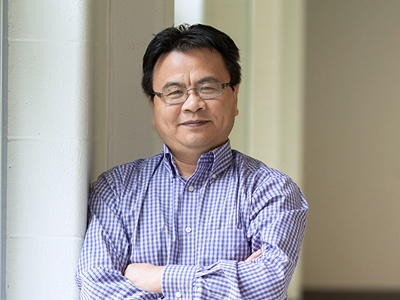
Pingzhao Hu
Associate Professor
Departments of Biochemistry, Computer Science, Statistical and Actuarial Sciences, Epidemiology and Biostatistics, and Department of Oncology
Western University
Dr. Hu has dedicated his research work to advancing transformative computational innovations that directly benefit Canadians. Examples include pioneering multimodal foundation-model approaches and generative AI systems that predict radiogenomic features and synthesize imaging data from genomic inputs; and GraphBAN, an inductive graph-based architecture improves compound-protein interaction prediction, advancing drug discovery through interpretable molecular representations. Dr. Hu has also co-led the development of AI models for antibiotic discovery, culminating in a U.S. patent filing for machine learning identified antimicrobial compounds.
CBH Impact Trainee Award
(Francis Ouellette Community)
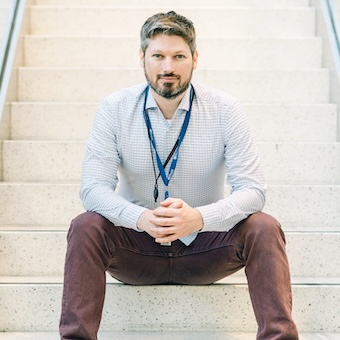
Wesley Wilson
Postdoctoral Fellow, Princess Margaret Cancer Centre, University Health Network
Dr. Wilson has been a pivotal figure in democratizing access to bioinformatics training. Dr. Wilson is a co-founder of the Bioinformatics Research Network, a 501(c)(3) non-profit dedicated to open science and training. Dr. Wilson is part of Data Carpentries, as well as the Bioconductor conference organizing committee. Dr. Wilson also serves on the Bioconductor education sub-committee, where they help develop novel teaching tools, ensures that bioinformatics pedagogy evolves to meet new challenges. Through his decade of teaching, his leadership in non-profit training, and his dedication to inclusive education, they have helped strengthened the future of bioinformatics in Canada.